Overview
This workshop focuses on the central role of representations in shaping the performance, scalability, and reliability of autonomous robotic systems. While perception, mapping, planning, and decision making are often studied as separate components, the choice of scene and map representations fundamentally couples these modules and directly influences downstream robot behavior. This workshop aims to bring together researchers who study how representation design: geometric, probabilistic, dense, implicit, or learned, affects the entire autonomy pipeline, from sensing and localization to planning, navigation, manipulation, and exploration.
The workshop targets an audience spanning multiple robotics sub-communities, including SLAM and mapping, robot perception, motion planning, decision making, manipulation, and autonomous navigation. We particularly encourage participation from researchers working on dense and implicit map representations (e.g., occupancy, signed distance fields, Gaussian splatting, neural fields), task-aware perception and mapping, active and informative planning, and joint optimization of perception and decision processes. Presenters and panelists will be drawn from both geometry- and learning-oriented communities, as well as from researchers bridging classical model-based methods with modern data-driven approaches.
The relevance of this workshop lies in providing a focused forum to examine how different map representations impact core robotic tasks. As robotic systems are deployed in increasingly diverse environments, practitioners are faced with a wide range of representation choices, each offering distinct advantages and limitations for downstream tasks. By centering the discussion on representation design and its practical implications, this workshop aims to compare how different representations support or constrain localization accuracy, planning efficiency, decision robustness, and exploration strategies. Rather than advocating a single representation paradigm, the workshop seeks to clarify trade-offs, failure modes, and task-dependent requirements, and to identify open problems in aligning representations with the needs of closed-loop autonomy. We expect the discussions to help researchers and practitioners make more informed representation choices and to inspire future work on task-aware mapping and perception for autonomous robotic systems.
Call for Contributions
We invite researchers and practitioners from robotics, computer vision, and related fields to share advances in representation-centric autonomy: preliminary results, systems insights, and lessons from deployment. Accepted contributions can be featured in the poster session; accepted papers may be listed on this workshop site.
Submission formats
Formats follow the official RSS 2026 venue.
Research Papers (up to 6 pages, excl. refs)
Field Reports / Visionary Papers (2–4 pages, excl. refs)
Non-anonymous Authors / Single-Bind Review
Submission via OpenReview
Submit through the RSS 2026 workshop group on OpenReview. Use your OpenReview account to create or upload submissions and track decisions.
If you already manage submissions as an author, you can also open your consoles via the same venue: Your consoles (OpenReview).
Important dates
Submission deadline: June 10, 2026 AoE
Decision notification: June 17, 2026 AoE
Publication and Archiving Policy
This workshop is non-archival. Accepted submissions will be invited for poster presentation and may be listed on the workshop website, but they will not be formally published in proceedings. Authors retain the intellectual property of their submissions and may submit extended versions of their work to other venues.
Paper awards
The workshop will recognize outstanding contributions with a Best Paper Award.
Topics of interest
Topics include, but are not limited to:
- Representation-aware state estimation
- Explicit and implicit representations for mapping and localization
- Hybrid representations combining model-based and data-driven approaches
- Representation choices for closed-loop decision making
- Task-aware perception and mapping for planning, navigation, and exploration
- Scalability and long-term consistency of representations in real-world environments
- Evaluation of representations based on task-level performance
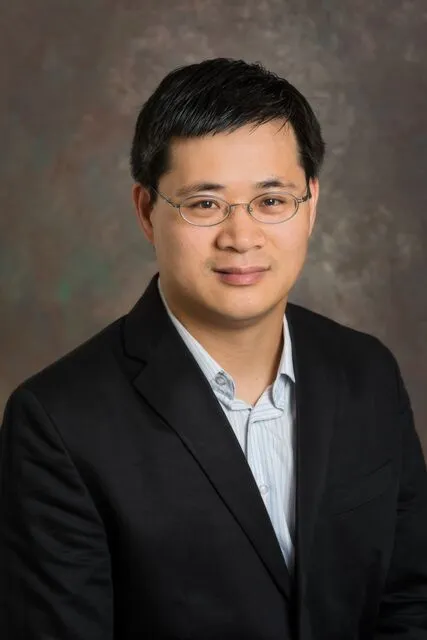
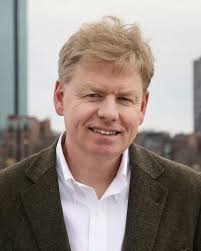
Keynote Speakers
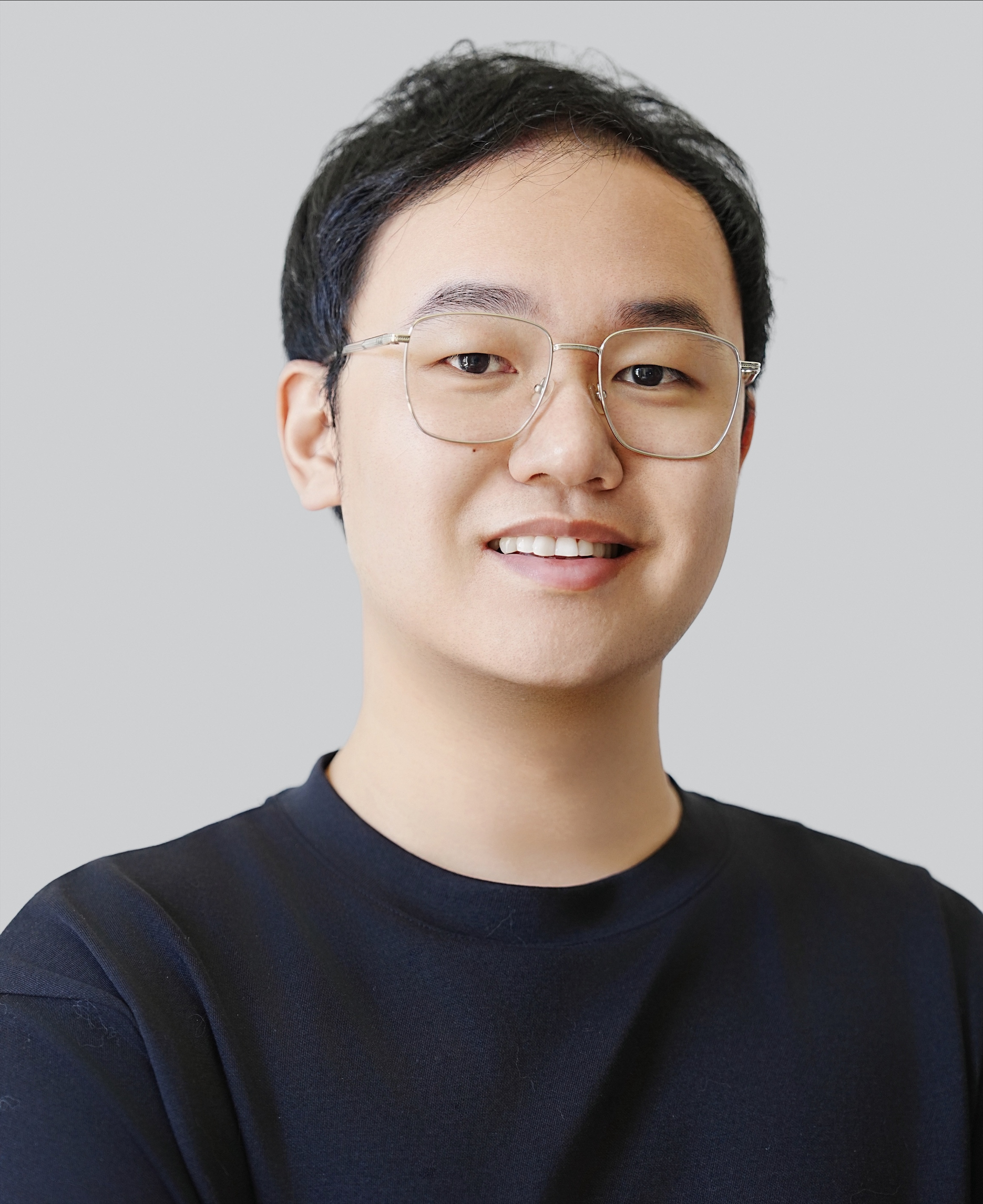
Organizers
Schedule
| Time | Session | Speaker |
|---|---|---|
| 8:30-8:35 | Welcome & Introduction | |
| 8:35-9:00 | Invited Talk 1 - Continuous Safety: Spatial Fields for Control, Planning, and Learning | Teresa Vidal-Calleja University of Technology Sydney |
| 9:00-9:25 | Invited Talk 2 - TBA | Lantao Liu Indiana University Bloomington |
| 9:25-9:50 | Invited Talk 3 - Computational Symmetry and Learning for Robotics | Maani Ghaffari University of Michigan |
| 9:50-10:05 | Early Career Talk - TBA | Yixi Cai KTH Royal Institute of Technology |
| 10:05-10:30 | Invited Talk 4 - Local Maps Are All You Need | Timothy D Barfoot University of Toronto |
| 10:30-11:00 | Poster Session & Coffee Break | |
| 11:00-11:25 | Invited Talk 5 - Visual-Inertial Perception: From Kinematics to Dynamics | Guoquan (Paul) Huang University of Delaware & Meituan |
| 11:25-11:50 | Invited Talk 6 - From Geometry to Neural Fields: Representation Choices for Robust and Scalable LIDAR Autonomy | Ayoung Kim Seoul National University |
| 11:50-12:15 | Invited Talk 7 - Towards "Undo" for the Physical World | John Leonard MIT |
| 12:15-12:20 | Closing Remarks |
Contact
Email: yingyu.wang@uts.edu.au
For inquiries about the workshop, submissions, or general information, please feel free to contact us.